Invalid
The state of being an invalid in The Secret Garden is a pervasive condition that defines the lives of several characters, most notably Colin Craven, and serves as a central obstacle to be overcome. It is not simply a matter of physical ailment but a complex identity woven from grief, fear, isolation, and the well-meaning but damaging ministrations of others. The narrative traces the journey from this state of enforced passivity and despair to one of health, agency, and joy, suggesting that the invalid state is as much a product of the mind and environment as of the body.
The Construction of the Invalid
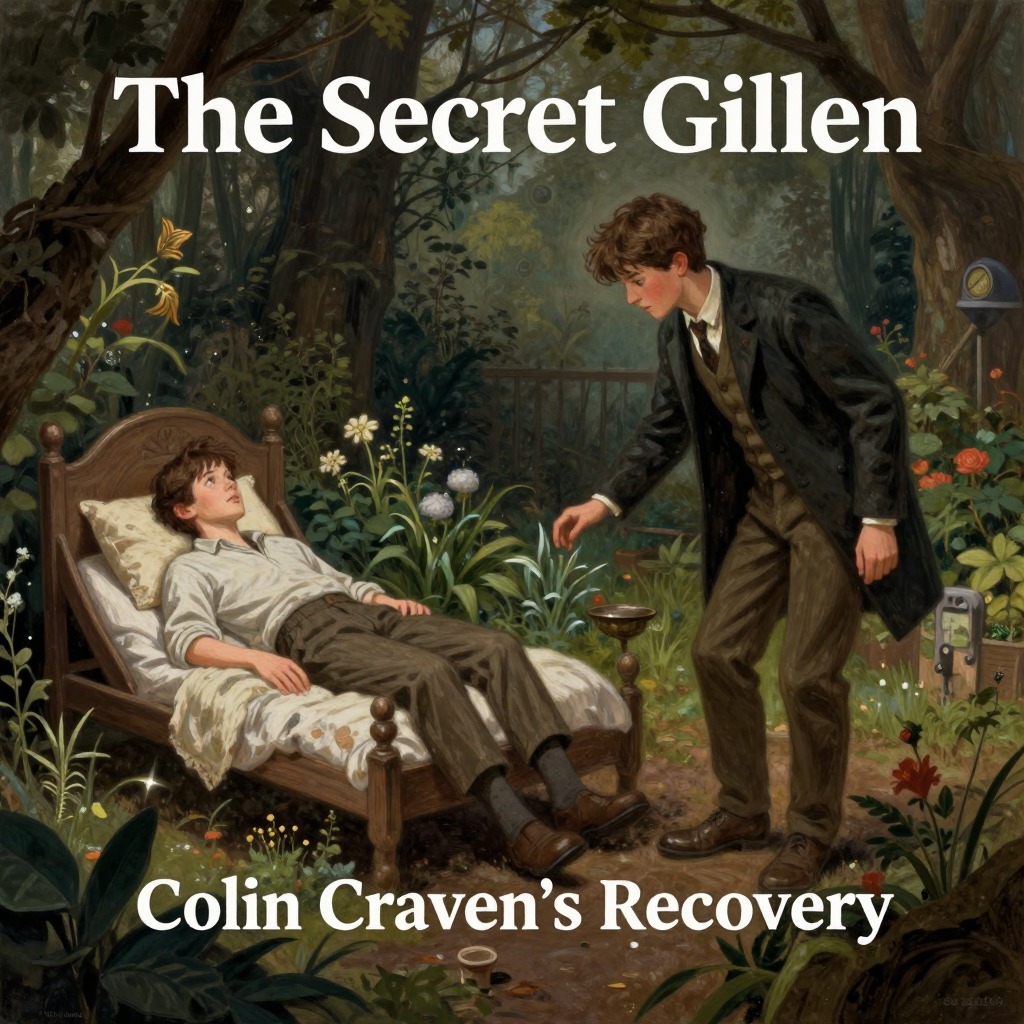
Colin's identity as an invalid is constructed from the moment of his birth. His mother, Lilias Craven, died shortly after he was born, and his father, Archibald Craven, was so devastated that he could not bear to look at his son, fearing the boy would be a hunchback like himself. This rejection, combined with the household's constant fear for his fragile life, created a world where Colin was treated as an invalid long before any definitive diagnosis. He was kept lying down, prevented from walking, and given his own way in everything to avoid upsetting him. As he himself explains, "Everyone is obliged to do what pleases me," and he was told, "No one believes I shall live to grow up" . This belief became a self-fulfilling prophecy, as he internalized the idea that he was destined to die. He heard the servants whispering about his impending death and even suspected his doctor, Dr. Craven, of hoping for it so he could inherit Misselthwaite Manor . The invalid state was thus a prison of low expectations, where the fear of death and deformity prevented any real attempt at living.
The Invalid's Inner World
The psychological experience of being an invalid is one of profound isolation and morbid self-absorption. Colin's world is confined to his room, where he lies on his sofa, reads picture books, and dwells on his fears. He is consumed by the terror of developing a hunchback, a fear that manifests in hysterical tantrums. He tells Mary, "I'm always thinking that if he should feel a lump coming he should go crazy and scream himself to death" . This constant focus on his own weakness and imagined deformities creates a cycle of illness: his hysterics exhaust him, leading to real physical symptoms like fever and headaches. The invalid state is therefore a condition of the mind as much as the body, a "hysterical hidden fear" that he cannot escape. He has no companions his own age and no experience of the outside world, which only deepens his sense of being different and doomed.
The Transformation from Invalid to Living Boy
The transformation from invalid to a healthy boy is the central arc of Colin's story, and it is catalyzed by his relationship with Mary Lennox and Dickon Sowerby, and by the discovery of the secret garden. Mary's blunt refusal to indulge his self-pity is the first crack in his invalid identity. When she tells him, "You just say that to make people sorry. I believe you're proud of it" , she challenges the very foundation of his worldview. The garden itself becomes the primary agent of change. The fresh air, the physical work of digging and weeding, and the simple act of watching things grow begin to strengthen his body and redirect his mind. He declares, "I've seen the spring now and I'm going to see the summer. I'm going to see everything grow here. I'm going to grow here myself" . This shift from waiting for death to anticipating growth marks the end of his invalid state. The final, dramatic break comes when he stands up to defy Ben Weatherstaff, proving to himself and everyone else that he is not a cripple. He cries out, "I shall get well! I shall get well!... And I shall live forever and ever and ever!" . The invalid is replaced by a boy full of life and determination.
Thematic Significance of the Invalid State
The concept of the invalid in The Secret Garden is a powerful metaphor for the potential for renewal that lies dormant in every person. Colin's invalidism is not a permanent condition but a state of being that can be reversed through the right combination of physical, psychological, and spiritual nourishment. The narrative suggests that the invalid state is often a social construction, maintained by the fears and expectations of others. By breaking free from these constraints, Colin not only heals his body but also reclaims his identity and his future. His journey from a hysterical, bedridden boy to a strong, laughing child who can run and dig is a testament to the novel's central theme: that life, like the garden, can be brought back from the brink of death with care, belief, and a little bit of Magic.